KIMU is a consciousness and culture platform as part of a wider network of multidimensional and multidisciplinary artistry. We are here for a spiritual revolution in art, media and beyond.
Read the full review at KIMU
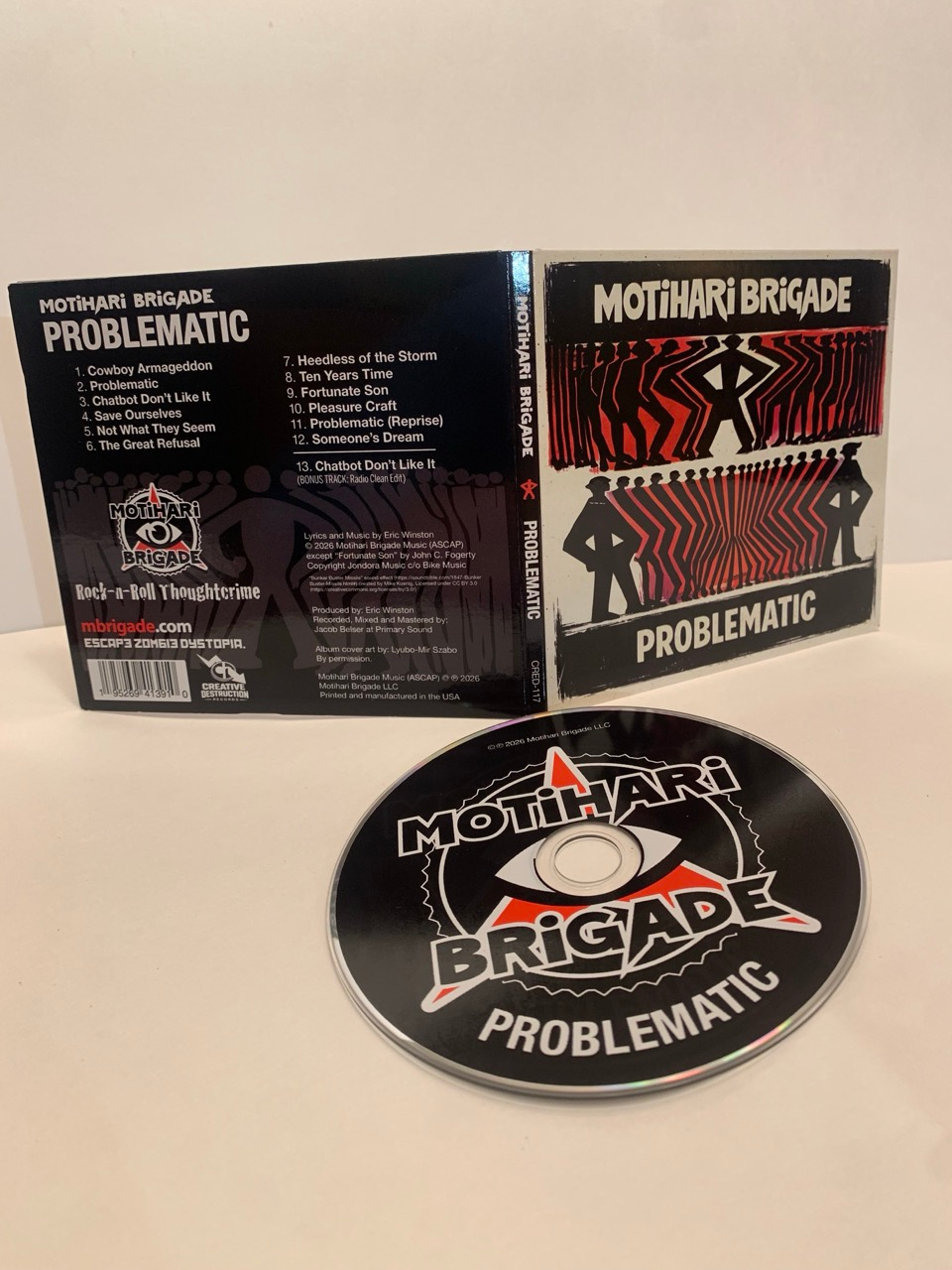
We have been intently following the lead up to Motihari Brigade‘s album, Problematic, and previously featured their cover of Fortunate Son, the stadium-ready single, The Great Refusal, and the thought-provoking, Save Ourselves, so when we heard that Problematic was finally here, poignantly on George Orwell‘s birthday, we couldn’t wait to share our track-by-track review!
The album opens with Cowboy Armageddon, which serves as a psychedelic rock intro to the album, this leads us to the title track of the record, which opens with the lyrics, “I’m problematic baby, don’t fit inside the box, I’m problematic baby, an enigmatic paradox…”. The trippy rock energy that transmutes, aligned with the concept of the song, sums up the manifesto of the whole record. It perfectly sets the tone for an album that questions the direction of modern society. On a philosophical level, it celebrates those of us who refuse to blindly conform to popular opinion or social pressure. Its message is that independent thinking might attract some criticism, but the authenticity and being true to oneself is ultimately worthwhile.
Next up is Chatbot Don’t Like It. Immediately we are drawn in by the title and the concept. The song uses comedy and satire to criticize automated systems, censorship and the frustration of dealing with modern technology (AI) that might lack human understanding. The playful and cerebral song suggests that genuine individuality cannot always fit inside predefined rules and algorithms. We love the power-pop harmonies and the sci-fi vibes that manifest with the spoken word virtual assistant – it’s genius really. The clean version at the end of the album preserves the song’s satire while making it suitable for wider audiences.
This brings us to Save Ourselves which opens like a Queen song, evolving into a song that you might experience in the Rocky Horror Picture Show. It’s camp but also cements the project’s stadium-ready energy. As for the message, the song argues that waiting for heroes and leaders to solve society’s problems is unrealistic. Instead, it encourages us to take responsibility for our own future and think independently.
Not What They Seem explores how appearances and mainstream accepted ideals are misleading. It’s a call for us to question assumptions and look beyond the surface before accepting something as “truth” per se. The sound is cohesive with the rest of the record, and again, the astral vocal harmonies are sublime.
We previously featured The Great Refusal which evocatively challenges institutional authority and the influence of powerful voices over public opinion. The song suggests that ordinary people may eventually reject manipulation and reclaim independent judgment. It feels like a cathartic shift in the album, which leads us through to a more optimistic direction.
Heedless Of The Storm is built around a series of questions. The prose examines conflict, propaganda, and the consequences of political decisions. It feels like a self-realization anthem for society, again, fitting into the overarching narrative of the record with a message that societies should think carefully before accepting official narratives or rushing into action. This is the longest track on the album with epic instrumentation lasting almost two minutes! To experience this live would be out of this world.
Now we trip into the future with Ten Years Time, which opens with an intricate Americana guitar soundscape with percussion like a rattle snake. The song, again laced with questions, reflects on how history often changes the way wars and major events are remembered. It’s the Mandela effect of songs, and reminds us that today’s certainty might become tomorrow’s regret once the full truth emerges. The instrumental segues invite introspection and the saxophone is transcendental. Again, this is a lengthy opus coming in at over eight minutes.
This leads us to Fortunate Son, which we featured upon its release. It remains a timeless criticism of privilege and the unequal burden of war. Its message continues to highlight the divide between those who make decisions and those who suffer the consequences.
Pleasure Craft explores humanity’s increasingly dependent relationship with technology, consumerism and digital life. It warns that convenience and endless entertainment can slowly become forms of control which feels super zeitgeist, as it’s what a lot of us are experiencing right now.
The reprise for Problematic revisits the album’s central theme with an even sharper focus on social judgment and labelling. It reinforces the idea that refusing to conform should not be mistaken for being dangerous.
This leads us to Someone’s Dream which opens with cerebral dreamlike notions and a more zen energy, designed to close the album on a reflective note. The cinematic song looks back on relationships, memories, and the lasting impact people leave in each other’s lives. It shows us that even when moments pass, our emotional connections continue to matter. The hook also resonates like a mantra of hope.
Overall, Problematic is a call to human intelligence in an increasingly automatic and authoritarian world. Motihari Brigade have succeeded in creating an album that sparks conversation and reminds us that asking difficult questions is where meaningful thought begins. For that level of consciousness, we are grateful.

Motihari Brigade’s new album “Problematic” is here to restore a defiant spirit of independent critical thinking in this age of artificially-curated digital algorithms. Feel vibrato electric guitar strings shake loose a world of illusions with lyrics inspired by the ideas of Orwell, Huxley, and Socrates. There is hope that Motihari Brigade’s brand of “Rock-n-Roll Thoughtcrime” can still save us – perhaps.
“Problematic” is Motihari Brigade’s third album, and the invention of guitarist, singer, and songwriter Eric Winston. The band derives its name from Motihari, India, birthplace of their truth-seeking spirit animal George Orwell.
Problematic is now available through popular digital streaming and download services, and on compact disc. Keep asking questions. Be problematic.